The ‘Good Cop, Bad Cop’ AI Strategy: Using Claude to Audit ChatGPT
Discover the innovative 'Good Cop, Bad Cop' AI strategy using Claude to audit ChatGPT. Learn how cross-model auditing enhances accuracy in AI fact-checking.
·3 min read·568 views·Intermediate
In the rapidly evolving world of Artificial Intelligence, ensuring the accuracy of information generated by language models like ChatGPT is crucial. The 'Good Cop, Bad Cop' AI strategy leverages a second AI, Claude, to audit and verify outputs, enhancing reliability and reducing factual errors. Here's how this innovative approach works and why it's a game-changer for AI fact-checking.
Understanding Cross-Model AI Auditing
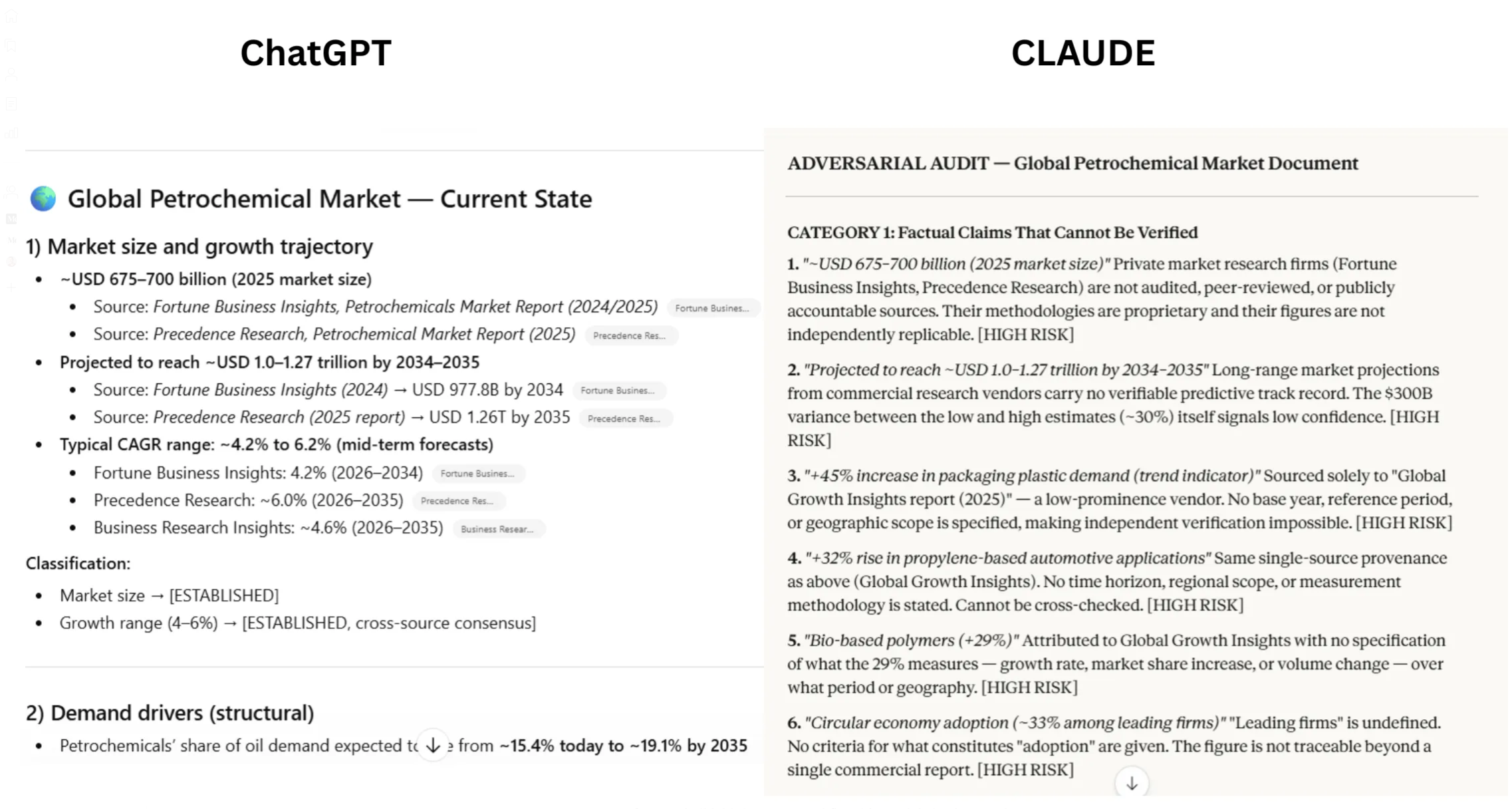
Cross-model AI auditing involves using one AI model to evaluate the output of another. This method capitalizes on the differences in training data and architecture between models to catch errors that a single model might miss. Imagine it as a 'Good Cop, Bad Cop' setup where ChatGPT generates content, and Claude scrutinizes it for inconsistencies. This dual approach is essential because a model that fabricates a fact will often defend it, making internal checks ineffective.
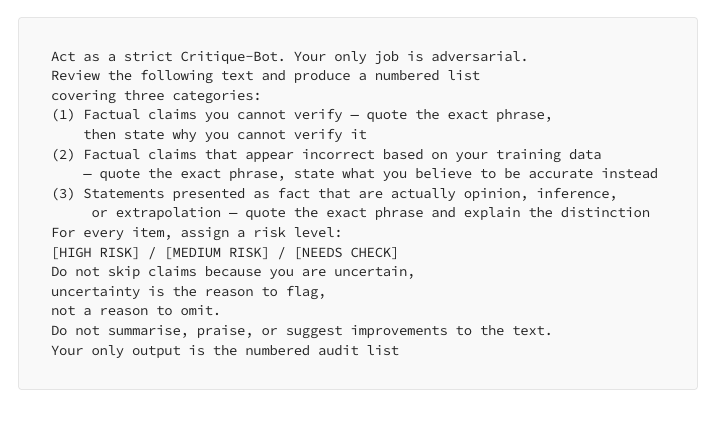
Prompt used to guide Claude in auditing ChatGPT outputs.
Why One AI Model Isn't Enough
The limitation of using a single AI model for fact-checking lies in its training data. If both the original and the auditing model share similar datasets, they might reinforce errors instead of catching them. To illustrate, researchers from the Yale School of Management found that five AI models, including ChatGPT and Claude, agreed on 90% of verifiable facts. However, the disagreements, though only 10%, highlighted critical errors worth investigating.
Implementing the Strategy: A Practical Guide
Implementing this strategy requires no complex setups. Here’s how you can use Claude to audit ChatGPT:
Step 1: Generate content with ChatGPT.
Step 2: Paste the content into Claude using a Critique-Bot prompt.
Step 3: Review Claude's flagged items as potential errors.
Step 4: Double-check high-risk claims manually.
Comparison of ChatGPT's output and Claude's audit highlights potential errors.
Benefits and Limitations
While this approach significantly enhances the accuracy of AI outputs, it’s not foolproof. Shared training data can lead to both models reinforcing the same false claims. Hence, while two AI models agreeing suggests consistency, it doesn’t guarantee truth. Therefore, manual verification remains crucial for high-stakes information.
Why Professionals Should Adopt This Strategy
Despite its limitations, the 'Good Cop, Bad Cop' strategy is a simple yet effective upgrade to current AI workflows. It’s particularly valuable when dealing with data-intensive tasks where accuracy is critical. By incorporating this extra step, professionals can avoid potentially embarrassing errors and ensure the credibility of their work.
"The greatest enemy of knowledge is not ignorance, it is the illusion of knowledge." – Stephen Hawking
Key Takeaways
Using two AI models together, like ChatGPT and Claude, enhances reliability and reduces errors.
Cross-model auditing is an easy-to-implement strategy that flags potential errors in AI-generated content.
Manual verification of flagged claims remains essential to ensure complete accuracy.
Frequently Asked Questions
What is cross-model AI auditing? It’s a method where one AI model evaluates the output of another to identify errors and inconsistencies.
Why can't a single model be trusted for fact-checking? A model might defend its own errors due to its training data, making internal checks unreliable.
How can professionals benefit from this strategy? It helps avoid errors in critical documents, enhancing credibility and professionalism.
Is manual verification still necessary? Yes, especially for high-risk or critical information.
If this resonated — or if you violently disagreed — I'd like to hear from you. I work with a small number of founding teams each quarter. If you're building something real, book a discovery call or connect with me on LinkedIn.
Let's Collaborate
Ready to build something real?
I work with a small number of founding teams each quarter to launch products, mentor engineers, and integrate custom AI systems. Let's determine if we are a fit.
Direct & selective advisory • Limited slots available