Why Strategies Die on Paper (and It's Not Your Fault)
Discover why strategies often fail before execution and learn how to create plans that truly work. It's not about your execution skills.
·3 min read·475 views·Intermediate
Strategies often fail before they even get started, and it's not because you're bad at execution. Understanding why this happens can help you craft strategies that actually work.
Symptoms of a Dying Strategy
Many CEOs find themselves troubled by plans that don't yield the expected results. This is not necessarily a failure of diligence but often a result of flawed strategic planning. Let's explore why strategies fall apart on paper.
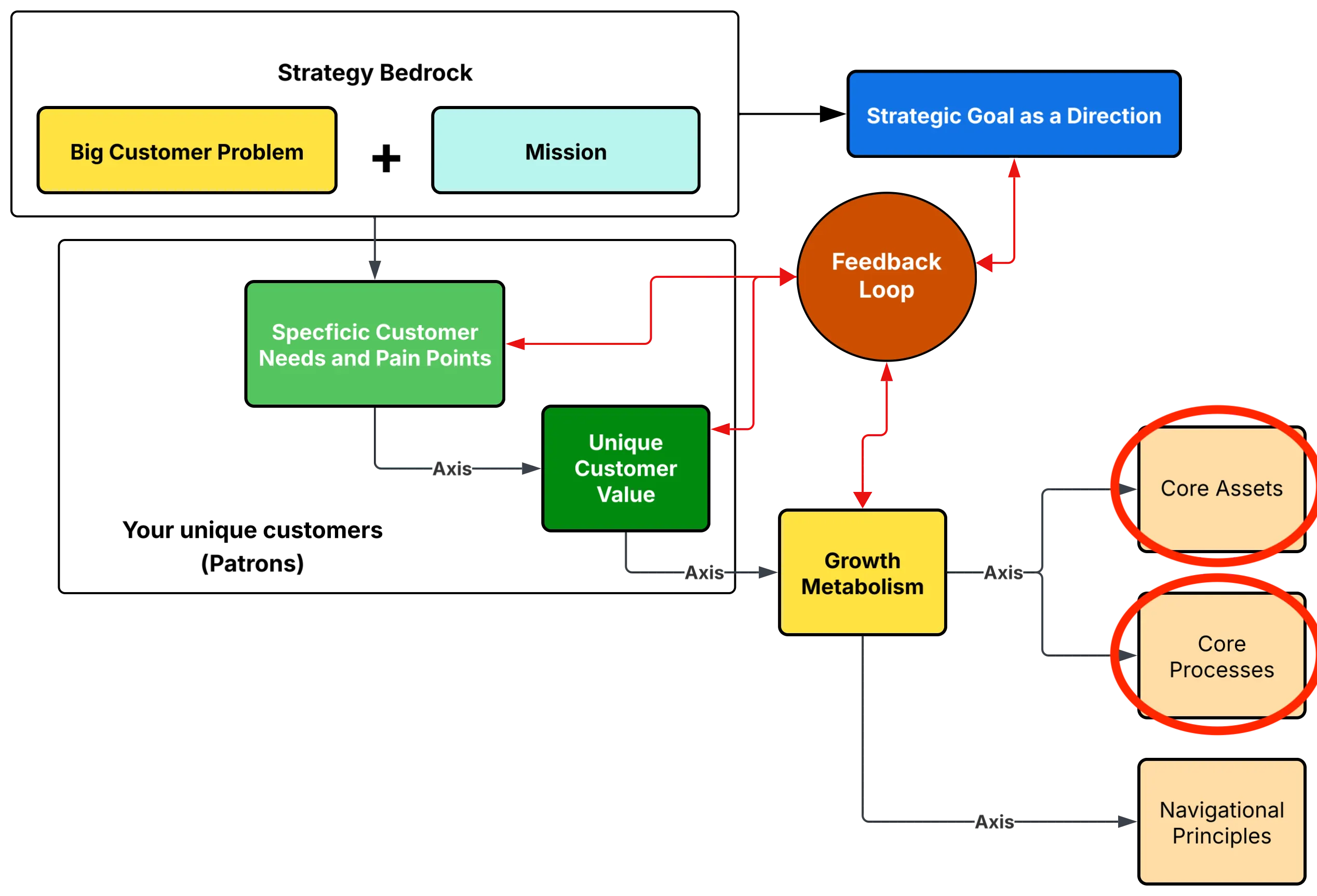
A diagram illustrating the strategic elements and feedback loops crucial to successful planning.
The Anatomy of Failed Strategies
Strategies often resemble a patchwork quilt of mismatched parts, leading to failure:
Frankenstrategies: These are plans with lofty goals but mundane projects, like saving the world by painting fences.
Internal Conflict: Employees are expected to maintain daily operations while also reinventing them, causing confusion.
The Priority Blur: Mixing essential tasks with innovative projects without clear prioritization leads to chaos.
The Vertical-Horizontal Trap: Goals are hierarchical, while processes are cross-functional, causing misalignment.
The Law of Fading Purpose: Over time, teams lose sight of the big goals amidst daily tasks.
Why Most Projects Fail
Only a small fraction of projects succeed in meeting their objectives. Breaking down a large goal into smaller projects works only when everyone understands the overall purpose and the processes are simple.
Understanding the Iceberg of Ignorance
The 'Iceberg of Ignorance' suggests that different organizational levels are aware of different problems, creating a disconnect between strategy and execution.
"A bad map is better than no map at all." - Peter Thiel
Mapping Core Assets and Processes
Incorporating core assets and processes into your strategy ensures you focus on what delivers real value to customers. Here's how:
Define the Strategic Foundation: Identify the big customer problem and the unique value you provide.
Map Assets and Processes: Involve team members from all levels to ensure alignment.
Hands-on Tips for Successful Strategy
Effective strategies require focus on core assets and processes, not just internal priorities. Regularly update your strategic maps and involve external advisors for unbiased perspectives.
Key Takeaways
Focus on core assets and processes to deliver unique customer value.
Involve all levels of the organization in strategic planning.
Avoid mixing urgent tasks with strategic priorities.
Frequently Asked Questions
Why do strategies fail before execution? Strategies often fail due to misalignment and lack of focus on core processes.
How can I ensure my strategy works? Involve your team in the planning process and focus on delivering customer value.
What is the 'Iceberg of Ignorance'? It refers to the lack of awareness of problems across different organizational levels.
If this resonated — or if you violently disagreed — I'd like to hear from you. I work with a small number of founding teams each quarter. If you're building something real, book a discovery call or connect with me on LinkedIn.
Let's Collaborate
Ready to build something real?
I work with a small number of founding teams each quarter to launch products, mentor engineers, and integrate custom AI systems. Let's determine if we are a fit.
Direct & selective advisory • Limited slots available